
Antarctica
When to go, how to get there, what a landing day actually feels like, what it costs, and how to choose among the eight operators worth considering.
- Season runs late October through March; November for ice, December and January for chicks and light, February and March for whales.
- Two gateways: Ushuaia for classic Drake Passage crossings, Punta Arenas for two-hour fly-cruise charters to King George Island.
- Realistic budget is 9,000 to 25,000 US dollars per person for a Peninsula voyage, before flights and insurance.
- Under-200-guest ships land all passengers at once under IAATO rules; larger ships rotate landing groups.
- Book 12 to 18 months ahead for the cabin categories and departures most travelers actually want.
The Antarctic season, month by month
The continent is only reachable for about five months a year, and the month you choose changes the trip more than the ship does.
Late October and November
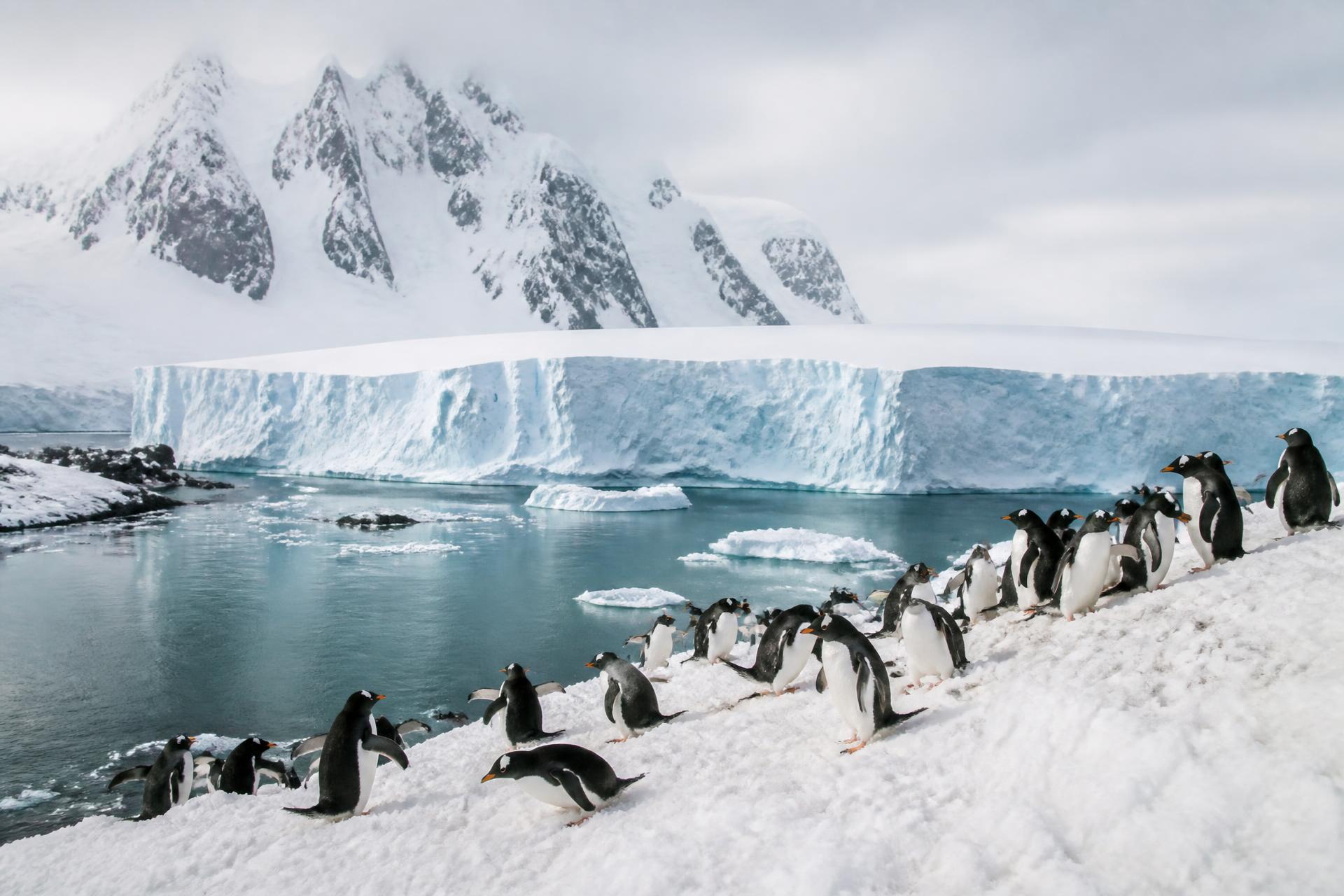
Early season. Deepest snow, most dramatic and untouched ice, penguins courting and building nests. Landing sites look pristine because few groups have been ashore. Slightly colder, and some sites remain ice-blocked.
December and January
High season. Warmest temperatures, near-continuous daylight, penguin chicks hatching, and the most active wildlife ashore. This is also the busiest and priciest window, and it books out earliest.
February and March
Late season. Peak whale watching, humpbacks and minkes feeding heavily, plus fledging chicks and fur seals. Snow is patchier and sites are more worn, but fares soften and ships are often less full.
South Georgia and Falklands add-ons
Available on longer 18 to 23 day departures, usually October through December for king penguin colonies at their most spectacular. The single best upgrade in Antarctic travel if you have the time and budget.
Gateway cities and how you reach the ice
Ushuaia, Argentina
The classic gateway and the departure point for most Peninsula voyages. Reached via Buenos Aires. Crossing the Drake Passage takes about two days each way, adding four sea days that many travelers come to love for the albatross and whale watching. Plan at least one buffer night in Buenos Aires and one in Ushuaia.
Punta Arenas, Chile
The fly-cruise gateway. A chartered two-hour flight crosses to King George Island, where you board the ship directly. Saves four days and skips the Drake entirely, at a premium price and with genuine weather-delay risk that can shift departures by a day or more.
Buffer days are not optional
Ships do not wait for late passengers, and a missed connection can cost the entire voyage. We build a minimum of one, preferably two, buffer nights into every Antarctica itinerary, and we book flights that protect the ship, not the cheapest routing.
What a typical landing day looks like
There is no fixed schedule in Antarctica. There is a rhythm, and it looks roughly like this.
- Step 1
Early wake-up and briefing
The expedition leader announces the day's plan around 7 a.m., after the bridge has assessed ice, wind, and swell. Plans change constantly, and the announcement you hear at breakfast may not be the one you heard the night before.
- Step 2
First landing, mid-morning
You suit up in the mudroom, boot-wash, and board a Zodiac from the shell door. Ashore you follow guided routes marked by the team, keeping the IAATO-required distance from wildlife. Expect one to three hours on land among penguin colonies, glacial terrain, or historic huts.
- Step 3
Zodiac cruise or activity
Some sessions replace a landing with a Zodiac cruise among icebergs and feeding whales, or with optional kayaking, snowshoeing, or a polar plunge. On ships that carry them, submarine dives and helicopter flights slot into this window.
- Step 4
Second landing, afternoon
A second site after lunch, weather permitting. Two landing sessions per day is the working target across the Peninsula, though ice and wind regularly reduce that to one.
- Step 5
Recap and dinner
The expedition team recaps the day, previews tomorrow, and delivers a lecture on glaciology, whale biology, Shackleton, or photography. Dinner follows, and most guests are asleep early despite the daylight.
Physical demands and realistic cost
- Climb a gangway ladder and step unassisted into a moving Zodiac.
- Step into ankle-deep water for wet landings, in loaned rubber boots.
- Walk 30 to 90 minutes on uneven snow, scree, and rock.
- Tolerate cold, wind, spray, and a schedule that changes without notice.
- Manage two days of open-ocean motion each way if you cross the Drake.
- Entry level, shared or triple cabin on a larger ship: 7,000 to 10,000 per person.
- Mid-range Peninsula voyage, balcony or window cabin: 12,000 to 20,000.
- Ultra-luxury suites, submarines, or helicopters: 25,000 to 45,000 and up.
- South Georgia and Falklands extensions: add 8,000 to 15,000 and about a week.
- Flights, gateway hotels, and evacuation-grade insurance: add 1,500 to 4,000.
How to choose between Antarctica operators
Eight operators are genuinely worth your attention for Antarctica. Each one is best at something specific.
Lindblad Expeditions
The naturalist standard, through a decades-long National Geographic partnership. Certified photo instructors, undersea specialists, and the deepest interpretive programming in Antarctica. Best when understanding what you are seeing matters as much as seeing it.
Aurora Expeditions
Australian-founded, climbing-heritage operator with small Ulstein X-BOW ships around 130 to 154 guests. Strong activity menu including sea kayaking, snorkeling, and camping, with a genuinely adventurous crowd onboard.
Quark Expeditions
The under-200-guest Zodiac advantage. Every ship stays below the IAATO threshold, so all passengers land at once rather than rotating, which converts directly into more hours on the continent. Helicopter capability on Ultramarine opens the Weddell Sea.
Silversea
Ultra-luxury expedition with the broadest polar portfolio and door-to-door air included on many fares. Butler service and superb food, paired with a serious expedition team. The simplest ultra-luxury booking to execute end to end.
Ponant
French luxury with unmatched polar reach. Le Commandant Charcot is a hybrid electric icebreaker that pushes into the Weddell Sea and Ross Sea where conventional expedition ships cannot follow. The choice for travelers who want the far side of the continent.
Scenic
Scenic Eclipse, the discovery yacht, carries just 200 guests in Antarctica with a helicopter and a submersible aboard, plus all-inclusive fares and an ambitious dining program. A distinctive blend of yacht comfort and expedition hardware.
HX Expeditions
Norwegian polar heritage dating to 1896, hybrid-electric ships, and onboard Science Centers with real citizen-science projects. Landings rotate on the 500-guest hybrids, but the value and the intellectual depth are hard to beat.
Seabourn
Submarines. Seabourn Venture and Pursuit each carry two six-guest subs, making Seabourn one of only two expedition operators with that capability, at just 264 guests and full ultra-luxury inclusive service.
Our honest take on planning Antarctica
Almost everyone books Antarctica once. That single fact should drive every decision. It is why we push clients toward smaller ships when shore time is the priority, and why we are blunt when a beautiful fare on a 500-guest vessel would mean rotating landing groups on the only Antarctic days they will ever have.
The Drake question comes up in every conversation. Flying saves four days and skips the crossing, which sounds obviously better until you learn that charter flights are weather-dependent and can strand you in Punta Arenas. Sailing costs you four days but gives you albatross, whales, and a genuine sense of how far away you are going. Neither answer is wrong. It depends on your time, your stomach, and your temperament.
What we will not compromise on: buffer days before embarkation, evacuation-grade insurance, and booking early enough to get a cabin worth having. If you are still deciding whether expedition travel suits you at all, our expedition travel hub covers the category from the beginning.
Antarctica, frequently asked questions
How much does an Antarctica expedition cost?
Most Antarctica expedition voyages run between 9,000 and 25,000 US dollars per person for a 10 to 14 day Peninsula itinerary, before international flights. Entry-level triple and quad cabins on larger expedition ships can start near 7,000, while ultra-luxury suites, South Georgia routings, and icebreaker departures regularly exceed 40,000 per person. Budget an additional 1,500 to 4,000 for flights to Ushuaia or Punta Arenas, gateway hotel nights, and mandatory evacuation-grade travel insurance.
When is the best time to go to Antarctica?
The season runs from late October through March, and each window offers something different. November brings pristine snow, dramatic ice, and courting penguins. December and January deliver the warmest temperatures, near 24-hour daylight, and hatching chicks, which makes it the most popular and most expensive window. February and March are the strongest months for whales, with fur seal and penguin chick activity ashore and slightly softer pricing. There is no bad month, only different trips.
Do I need to be fit for an Antarctica cruise?
You need reasonable mobility rather than athleticism. The baseline requirements are managing stairs and a gangway ladder, stepping unassisted into a moving Zodiac, and walking on uneven snow and rock in heavy boots. Landings are usually wet, meaning you step into ankle-deep water. Most travelers in ordinary health, including many in their seventies and eighties, do this comfortably. Kayaking, camping, snowshoeing, and mountaineering add-ons are significantly more demanding and always optional.
How do I get to Antarctica?
There are two routes. The classic option sails from Ushuaia, Argentina, crossing the Drake Passage in roughly two days each way, which adds four sea days but also adds seabirds, whales, and the crossing itself as part of the experience. The fly-cruise option charters a flight from Punta Arenas, Chile, to King George Island in about two hours, letting you board the ship directly and skip the Drake. Fly-cruise costs more per day and carries weather-delay risk, but saves four days.
Which cruise line is best for Antarctica?
There is no single best line, only the best fit. Quark and Aurora maximize landing time with ships under 200 guests. Lindblad leads on naturalist depth through its National Geographic partnership. Silversea, Seabourn, and Ponant deliver ultra-luxury, with Seabourn adding guest submarines and Ponant operating the hybrid icebreaker Le Commandant Charcot for the deepest polar reach. Scenic offers a discovery yacht with helicopter and submarine. HX Expeditions brings 1896 Norwegian heritage and the strongest value. We match the operator to your priorities.
Related reading
Ready to travel better?
Tell us where you're dreaming of, and one of our advisors will be in touch within two business days.
Mon – Fri 9 AM – 6 PM · Sat 9 AM – 5 PM