
Expedition Travel
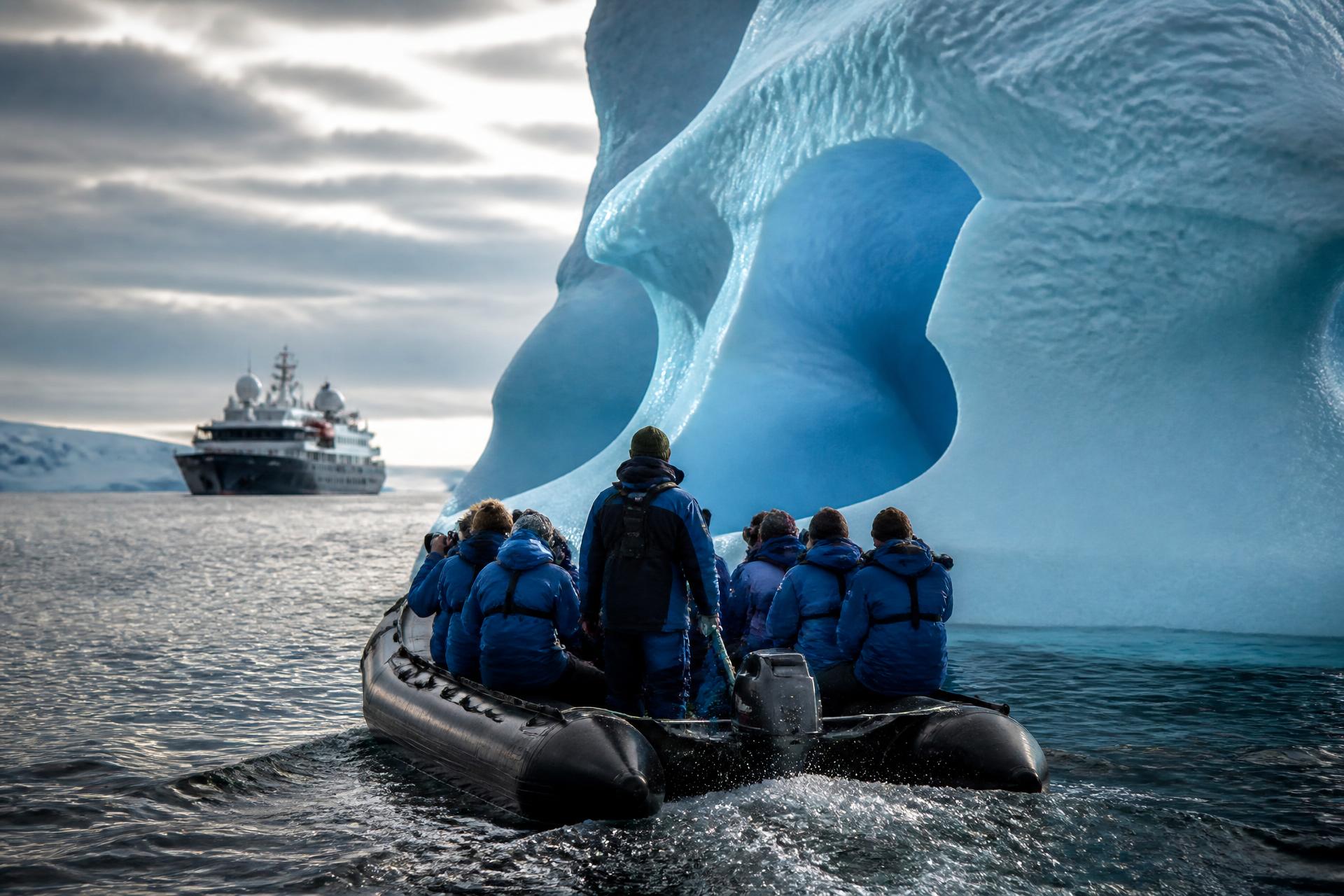
Small ships, Zodiac landings, and expedition teams that take you where cruise terminals do not exist. Here is how the category actually works, and how to choose within it.
- Small ships, usually 100 to 500 guests, reaching coastlines with no port infrastructure at all.
- Zodiac landings and sea kayaking replace piers, tour buses, and shore-excursion queues.
- Expedition teams of naturalists, historians, and scientists lead daily programming and briefings.
- Itineraries are intentions, not guarantees: weather, ice, and wildlife dictate each day's plan.
- Specialist planning matters because inclusions, guest counts, and gateway logistics vary wildly by operator.
Expedition travel vs. standard cruising
Both happen on ships. Almost nothing else about them is the same.
Ship size and where it can go
Expedition ships carry 100 to 500 guests and are built with ice-strengthened or polar-class hulls, so they can anchor off uninhabited coast. A 4,000-guest resort ship needs a deepwater pier and terminal, which limits it to developed ports.
How you get ashore
Expedition guests board Zodiac inflatables from a shell door or marina platform, often stepping into shallow water in loaned boots. Standard cruising uses gangways onto piers or tender boats into harbors.
Who leads the day
An expedition team of naturalists, glaciologists, ornithologists, historians, and photographers plans landings, briefs guests, and lectures each evening. On a standard cruise, a shore-excursion desk sells third-party tours.
How fixed the schedule is
Expedition itineraries change constantly and legitimately, for ice, wind, swell, and wildlife. That flexibility is the product. Standard cruise itineraries are contractual and rarely move.
What the onboard experience is for
Expedition ships have science centers, mudrooms, observation lounges, and lecture theaters. Resort ships have casinos, waterslides, Broadway-style shows, and multiple pools. Neither is better; they serve different travelers.
What you are buying
On an expedition, you pay for access, expertise, and small-group scale. On a standard cruise, you pay for amenities, variety, and value per night. Confusing the two is the single most common reason a first expedition disappoints.
Why expedition travel requires specialist planning
Expedition fares are not comparable on their face. One operator includes the charter flight over the Drake Passage, the gateway hotel, the parka, and the kayaking; another includes the parka and nothing else. Two itineraries with identical names can differ by a week of sea time. Guest count changes how many hours you actually stand on land. None of this is visible in a headline price.
Then there is the logistics layer. Gateway cities such as Ushuaia, Punta Arenas, Longyearbyen, and Quito require buffer days that are not optional; a missed connection can cost the entire voyage because the ship will not wait. Insurance requirements are stricter than on standard cruising, medical screening is real, and cancellation terms tighten far earlier. Expedition travel is also usually booked 12 to 18 months out for the cabin categories most people want.
We hold certifications and supplier standing across the operators that matter in this category, Lindblad, Aurora, Quark, Silversea, Ponant, Scenic, HX Expeditions, and Seabourn, which means we compare landed cost and honest fit rather than brochure language. If you want the numbers and the operator-by-operator breakdown for the flagship destination, start with our Antarctica expedition guide.
Expedition destinations
We are building these guides one destination at a time so each one is genuinely useful rather than a placeholder. Antarctica and the Galápagos are live now.
More guides in progress
Arctic and Svalbard, plus Alaska, guides are being written now. In the meantime, our advisors plan both directly, so reach out and we will walk you through operators and timing by phone.
Talk to an advisorWho expedition travel is, and isn't, for
- Travelers whose priority is wildlife, landscape, and genuine remote access.
- Curious guests who will attend the lectures and want to understand what they are seeing.
- People comfortable with an itinerary that changes for weather, ice, and animals.
- Anyone who would rather spend the budget on access and expertise than on amenities.
- You want a fixed schedule and guaranteed ports.
- You are shopping primarily on price per night.
- You want casinos, production shows, waterslides, or large kids programming.
- Limited mobility would make Zodiac boarding and wet landings unsafe or unenjoyable.
How we approach expedition planning
We start with three questions, not with a brand. How much do you care about maximizing time on land? How much luxury do you actually want around you at the end of the day? And how honest are we being about mobility and comfort in small boats?
Those answers usually narrow eight credible operators to two. From there it becomes concrete: which ship, which season, which cabin category, which gateway, how many buffer days, what the insurance has to cover, and what the landed cost really is once flights and add-ons are in the spreadsheet.
Expedition travel is one of the few remaining categories where an advisor changes the outcome rather than just the paperwork. The difference between a well-matched voyage and a poorly matched one is not a few hundred dollars, it is whether the trip you saved years for was the right trip. Our planning process explains how that works step by step.
Expedition travel, frequently asked questions
What is expedition travel?
Expedition travel uses small ships, typically 100 to 500 guests, to reach places with no cruise terminal, no tour bus, and often no permanent human presence. Guests go ashore by Zodiac inflatable boat rather than a gangway onto a pier, days are shaped by weather, ice, and wildlife rather than a fixed schedule, and an expedition team of naturalists, glaciologists, historians, and photographers leads the programming. The destination is the entertainment.
How is expedition travel different from a regular cruise?
A standard cruise sails between developed ports on a large resort-style ship with theaters, casinos, waterslides, and a published hour-by-hour schedule. Expedition travel inverts that. Ships are small enough to enter fjords and anchor off uninhabited coastline, landings happen by Zodiac in small groups, itineraries are published as intentions that shift with conditions, and the onboard experience centers on lectures, science, and wildlife briefings instead of production shows. You trade predictability and amenities for access.
Do I need to be fit for an expedition trip?
You do not need to be an athlete, but you do need reasonable mobility and balance. The baseline physical demands are climbing a gangway ladder into a moving Zodiac, stepping into shallow water for a wet landing, and walking on uneven snow, rock, or sand in loaned boots. Most travelers in ordinary health manage this comfortably. Optional activities such as kayaking, snowshoeing, mountaineering, and long hikes are meaningfully more demanding and are always separate from the base program.
How much does expedition travel cost?
Plan on roughly 1,000 to 3,000 US dollars per person per day for polar expedition travel, before flights. A shorter Antarctic Peninsula voyage often lands between 9,000 and 20,000 dollars per person, while ultra-luxury ships, longer South Georgia routings, or icebreaker itineraries can exceed 40,000. Galapagos and warm-water expedition trips generally run lower. Always compare landed cost rather than headline fares: charter flights, gateway hotels, insurance, and optional activities differ enormously between operators.
Which expedition cruise line is right for me?
It depends on how you weigh guest count, luxury level, and specialty hardware. Quark and Aurora prioritize small ships and shore time. Lindblad leads on naturalist and National Geographic programming. Silversea, Seabourn, and Ponant deliver ultra-luxury, with Seabourn adding guest submarines and Ponant offering the icebreaker Le Commandant Charcot. Scenic runs a discovery yacht with a helicopter and submarine. HX Expeditions offers Norwegian polar heritage and strong value. We match the operator to your priorities rather than starting with a brand.
Related reading
Ready to travel better?
Tell us where you're dreaming of, and one of our advisors will be in touch within two business days.
Mon – Fri 9 AM – 6 PM · Sat 9 AM – 5 PM