
Why I tell clients to fly into Vancouver, not Seattle, for an Alaska cruise
Every year I get some version of the same question: "Should we fly into Seattle or Vancouver for our Alaska cruise?" Most people already have an answer in mind before they ask me. Seattle, because it's still the U.S., because it feels simpler, because it's the name they've heard more.
I usually tell them to look at Vancouver first. Here's the full case for why.
Most people don't know Vancouver is even an option
People assume Seattle is the move because it's still the U.S. Vancouver feels like an extra step, a border, a hassle. Most people don't even realize you can sail out of Vancouver at all, so it rarely comes up as an option when they start planning.
Here's what most people don't factor in. Sailing from Vancouver means one less sea day. You fly in, and you're in the adventure almost immediately instead of burning a full day at sea just to get north.
The real reason Seattle cruises stop in Canada
Most Alaska cruises out of Seattle are required by federal law to stop in Victoria, British Columbia. It's called the Passenger Vessel Services Act, a law from 1886 that requires foreign-flagged ships, which is most of the global cruise fleet, to make a foreign port stop on any round-trip sailing that begins and ends at the same U.S. port. Without that stop, the cruise line is breaking the law.
In practice, that Victoria stop usually lands in the evening, often between 7 and 9pm, and lasts under 5 hours. Most shops and attractions are already closed by the time you get off the ship. That's the port day you lose sailing from Seattle: not a full day in Alaska, but a few hours in the dark in a city most people didn't plan to visit anyway.
Calmer water, better views
The route matters too. Sailing the Inside Passage out of Vancouver means you're surrounded by land on both sides the whole way, mountains everywhere you look. This is where a balcony room earns every extra dollar over an inside stateroom. On our own sailing, I spent most of my time out there instead of roaming the ship, which isn't normal for me. Alaska cruises run during long daylight hours, so you can step outside at 9 or 10 at night and still see everything in full light.
The open water crossing from Seattle runs rougher by comparison. If anyone in your group deals with motion sickness, that's worth knowing before you book, not after you're a day into the trip.
Where we stayed the night before boarding
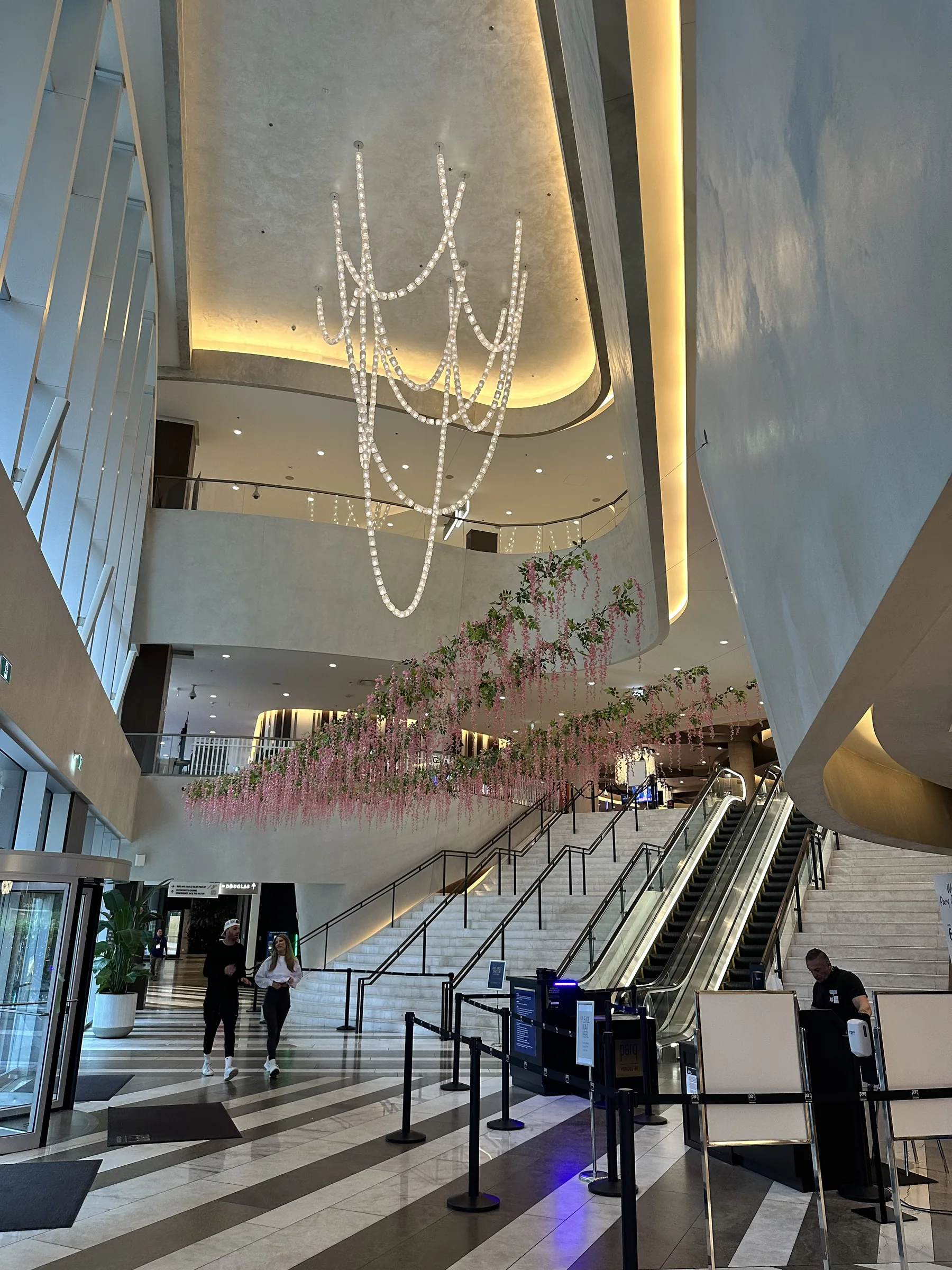
We flew into Vancouver the night before our ship left and stayed at the JW Marriott Parq. Calling it a hotel undersells it. The property is built around a 30,000 square foot rooftop garden on the 6th floor, connecting the JW Marriott to The Douglas hotel next door. There are 8 restaurants and bars on site, and a 72,000 square foot casino running 600 slot machines and 63 gaming tables across 2 floors.
We had dinner at The Victor, the steakhouse right off that rooftop garden, built around Pacific Northwest seafood and specialty steaks. It set a good tone the night before a long trip.
The rooftop garden
The garden is where my kids spent most of their time. Butterflies everywhere, park benches, a swing, and it's quiet up there. You can hear the wind moving through the tall grass and the trees. After a travel day, that kind of calm matters more than people expect, and it's a detail I point out to families specifically. Kids need a place to decompress before a week on a ship, and this property has one built right in.
Boarding morning
The JW sits about 1.3 miles from the cruise terminal, 10 to 15 minutes by Uber or taxi depending on traffic. Vancouver's port is also just easier to move through than a lot of U.S. departure ports. It's not fighting Miami or Cape Canaveral-level crowds. It rained the morning we boarded, and the terminal itself is covered, so we unloaded our bags to the baggage attendant without ever standing in the rain. From there it was a short walk outside to get onto the ship.
One practical warning: bring the right currency
Vancouver doesn't run on U.S. dollars. A credit card with no international transaction fees handles this automatically, and I'd suggest anyone traveling internationally carry one regardless of destination. We also brought a decent amount of cash and left it in our hotel safe rather than exchange it before the trip. Getting that cash converted back afterward turned into a longer, more frustrating process than expected. If you're bringing cash to Canada, exchange it before you go, not after you're already home.
Why this isn't a "someday" decision
Alaska cruise lines release next summer's sailings in the fall, and the good cabins go first. Balcony rooms, the ones you actually want for the Inside Passage, along with any Glacier Bay-specific itinerary, are usually the first categories to sell out. Most travel advisors, myself included, recommend booking peak summer Alaska sailings 9 to 12 months ahead if you want real cabin choice instead of whatever's left.
Frequently Asked Questions
Do you need a passport to cruise from Vancouver?
Yes. Sailing out of Vancouver requires a passport, while a closed-loop round trip from Seattle technically does not. I still recommend traveling with one regardless of departure city, and you'll want it anyway if your itinerary includes an excursion like the Alaska Railway that crosses into Canada.
Can you still sail if you have a DUI or DWI on record?
It depends, and it's worth a real conversation with your advisor before booking either route. Canadian entry rules can affect admissibility at any Canadian port stop, whether that's a one-way Vancouver sailing or a quick evening call in Victoria on a Seattle round trip. This isn't something most people think to ask about until it becomes a problem at the border.
Why do Seattle Alaska cruises stop in Victoria, British Columbia?
Federal law requires it. The Passenger Vessel Services Act, dating back to 1886, requires foreign-flagged ships to make a foreign port stop on any round-trip sailing beginning and ending at the same U.S. port. For Seattle-based Alaska cruises, Victoria satisfies that requirement.
Is the water rougher sailing from Seattle than from Vancouver?
Generally, yes. Vancouver sailings stay inside the protected Inside Passage the whole route, while Seattle sailings cross more open water to reach it. If anyone in your group is prone to motion sickness, that's a real factor worth considering before you book.
How far in advance should you book an Alaska cruise?
For peak summer sailings in June, July, or August, 9 to 12 months ahead is standard advice among travel advisors. Balcony cabins and Glacier Bay-specific itineraries are usually the first categories to sell out once cruise lines release the following summer's schedule in the fall.
How I actually use this with clients
When a family comes to me deciding between Seattle and Vancouver, I'm not picking based on which name sounds more familiar. I'm looking at how many days they have, whether anyone gets seasick, whether they want a night in a city before boarding or would rather just get straight to the ship, and what kind of cabin actually matters to them. Vancouver wins that comparison more often than people expect, and once families see the actual difference laid out, most of them agree.
If you're planning an Alaska cruise and trying to decide where to start it, that's exactly the kind of conversation I have with clients every week. Reach out and we'll figure out which route actually fits your trip.